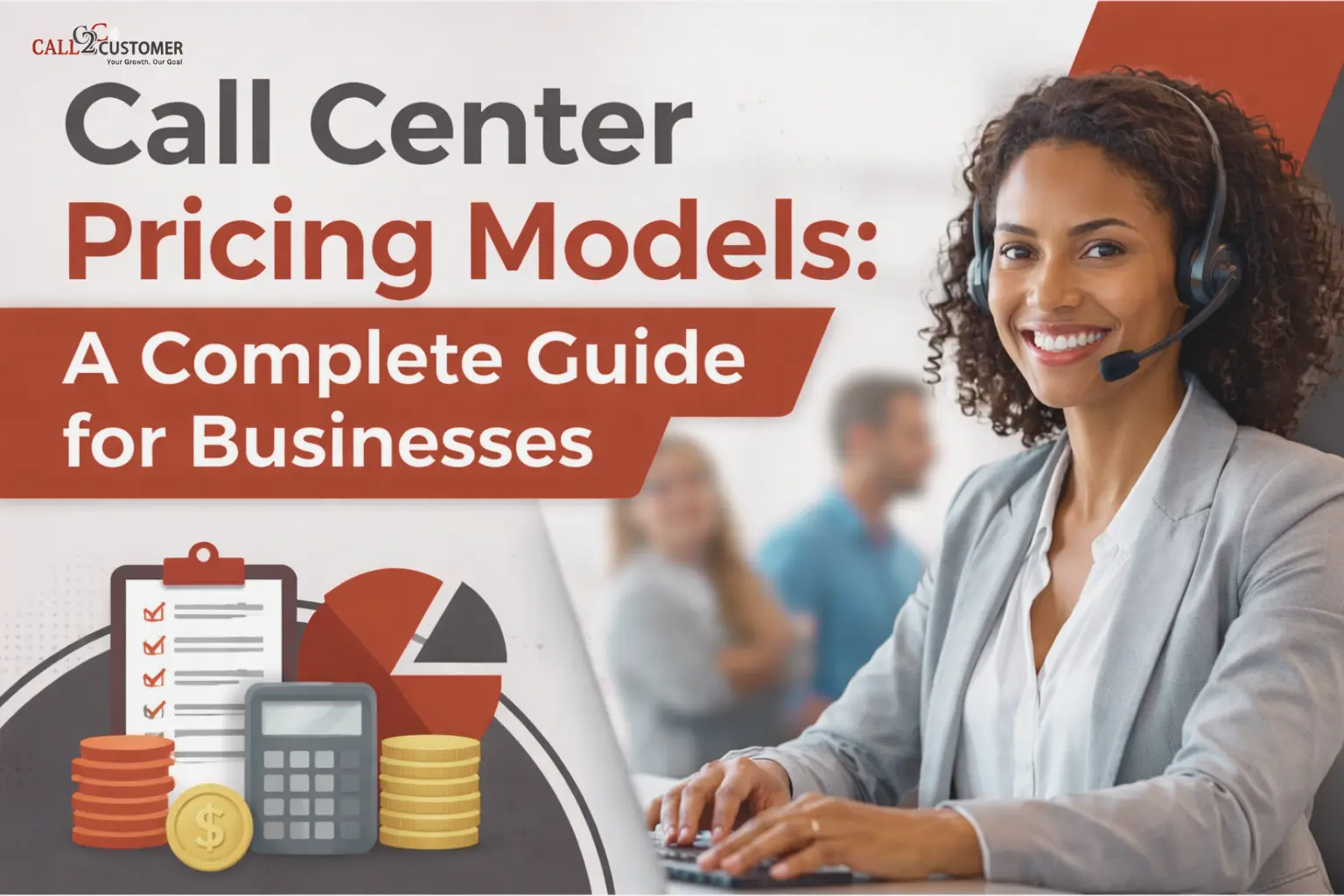
Organizations must learn about call center pricing models because it serves as their initial requirement before outsourcing their customer service operations. The models establish the expenses which businesses must pay to conduct their customer service operations. Businesses achieve effective cost management through their selection of appropriate pricing structures which simultaneously enhance their operational efficiency and facilitate their support service expansion.
Call2Customers operates as a professional call center in India which provides multiple pricing plans that businesses can select according to their specific requirements and expected call traffic and need for different services. The companies which want to understand these structures will benefit because they will discover the optimal solution which matches their financial resources and customer service objectives.
What Are Call Center Pricing Models?
Outsourcing companies use different cost structures to determine how they charge their clients for services. Call centers provide their services through flexible pricing structures because different businesses have unique customer support needs.
Some businesses receive a large number of customer calls daily, while others may only require occasional support. The Indian call center industry offers multiple budget options to businesses because companies need different solutions for their budget requirements.
Why Do Businesses Need to Understand Call Center Structures?
People need to understand costing structures because this knowledge enables businesses to select their outsourcing partners more effectively. Companies require knowledge about their billing methods which enables them to create their budgets and choose their optimal support model.
The following business reasons show why organizations need to understand BPO support cost structures.
· Better cost control – Businesses can choose a model that fits their budget
· Improved efficiency – The right model helps optimize customer support operations
· Scalability – Companies can expand their support services when demand increases
· Transparency – Clear pricing helps avoid unexpected expenses
Many companies prefer working with a call center because they receive professional services at competitive prices while maintaining high service quality.
Types of Call Center Pricing Structures
Different outsourcing companies offer various BPO support cost plans to suit different business needs. Below is the most common costing structures used in the industry.
1. Per Hour Pricing Model
In the per hour model, the cost is based on the number of working hours. This model works well for businesses that need flexible customer service without long-term commitments. They can adjust the number of working hours.
Many organizations working with a call center prefer this model for seasonal or short-term projects.
2. Per Call Pricing Model
In this model, you have to pay for every call handled by the call center agents. The price may vary depending on call complexity or duration.
This model is suitable for companies with predictable call volumes. It ensures that companies only pay for services that they use.
For instance, businesses operating customer service call centers might prefer this option when dealing with a call center.
3. Per Minute Pricing Model
This model charges according to the time taken by their call agents. This includes the actual conversation time with customers.
This model is commonly used for technical support or customer service operations where call duration can vary significantly.
It allows companies to pay only for the exact time spent assisting customers.
4. Per Agent Pricing Model
The per-agent model is also known as the dedicated agent model. The system requires to pay a monthly rate that remains constant for every agent who works on their project.
The cost structure operates most effectively for organizations that require a permanent support team to manage their customer communications.
The dedicated support model enables companies to maintain a constant level of service while their call center in India provides specialized attention to their customers.
5. Transaction-Based Pricing Model
The model requires to make payments according to their completed tasks and transaction volume. The scope of the project includes activities such as order processing and appointment scheduling and customer verification.
companies that offer specialized services use transaction-based cost because they need to charge customers for completing defined tasks and their system does not require handling incoming calls.
The model operates best for organizations that need to maintain organized systems for their customer support activities.
How to Choose the Right Call Center Pricing Model in India
The choice of the right cost structure depends on various factors. Businesses should first assess their needs with regard to customer support before making the right choice.
Some of the key factors that comapnies should consider are as follows:
- Call volume – Businesses with high call volumes may require dedicated agents.
- Type of service – Technical support, sales, and customer care may require different costing structure.
- Budget – Companies should choose a model that offers the best value for money.
- Business growth plans – The pricing model should allow easy scaling when demand increases.
A trusted call center in India like Call2Customers helps businesses identify their needs and pick the best pricing option.
Benefits of Choosing the Right Cost structure
Selecting the appropriate cost structures can provide several advantages for businesses.
Cost efficiency
Businesses only pay for the services they actually need.
Scalability
Companies can easily increase or reduce support capacity depending on demand.
Better customer service
A well-structured pricing model ensures that businesses receive consistent and reliable support.
Predictable expenses
Clear pricing structures help companies plan their budgets more effectively.
Conclusion
Businesses that intend to outsource their customer support operations need to understand call center pricing model because these models represent essential knowledge for their decision-making process. Companies can select their preferred pricing structure from multiple options which provide them with operational flexibility to choose what best meets their requirements.
Call2Customers provides businesses with professional customer support solutions through its experienced Indian call center which offers transparent flexible pricing options. Companies obtain better cost control through their correct cost structure selection which also enhances service quality and supports business expansion efforts.
FAQs
1. What are the different outsourcing pricing structures for businesses?
Pricing structures refer to the various methods adopted by an outsourcing firm in pricing the customer service provided to the business.
2. Which cost structure is best for small businesses?
Per call/minute pricing is the most suitable cost structure that can be adopted by small businesses.
3. What is a dedicated agent model?
The dedicated agent model requires businesses to pay a monthly subscription fee which provides them with one dedicated agent who will manage their customer service operations.
4. Why do businesses hire call center operations in India?
Many businesses outsource their operations to India because they can receive high-quality service delivery provided at very low costs.
5. Can call center pricing structures be customized?
The majority of outsourcing companies provide their clients with pricing structures which they can adjust according to their particular business requirements.